Selling a waterfront home in Bellevue can feel like juggling permits, surveys, and shoreline rules while trying to keep your timeline on track. You want to present your property with confidence, avoid last‑minute surprises, and give buyers the clarity they need to move forward. This checklist walks you through exactly what to gather, what to verify, and how to market your shoreline features the right way under local and state rules. Let’s dive in.
Why shoreline compliance matters in Bellevue
Unpermitted docks, bulkheads, or shoreline work can slow a sale, create lender or insurance hurdles, and even trigger enforcement. Buyers and their inspectors often ask for permit history, as‑builts, and proof of compliance. When you confirm these items up front, you protect your price, your timeline, and buyer confidence.
Who regulates your shoreline features
Federal
- U.S. Army Corps of Engineers regulates work in navigable waters and wetlands. Many small dock or maintenance projects may qualify for a Nationwide Permit, but you still need verification.
State of Washington
- Washington’s Shoreline Management Act and Department of Ecology set statewide rules, including what counts as substantial development and when exemptions apply. The monetary threshold for substantial development is set by Ecology and can change, so confirm the current value.
- Washington Department of Fish and Wildlife issues Hydraulic Project Approvals for in‑water work that affects fish habitat. HPAs commonly apply to docks, pilings, boat lifts, and bulkhead repairs.
Local: City of Bellevue and King County
- City of Bellevue implements the Shoreline Master Program and issues Shoreline Substantial Development Permits, Conditional Use Permits, and Variances. Bellevue also interprets buffer, vegetation, and stabilization standards.
- King County resources may apply for floodplains, critical areas, or county‑level rules that intersect your site.
Pre‑listing document checklist
Gather these items now so you can answer buyer questions and keep escrow smooth.
Permits, approvals, and compliance history
- Copies of all shoreline‑related permits and approvals: Bellevue shoreline permits (SDP, Conditional Use, Variance), WDFW HPA, and Army Corps authorizations or Nationwide Permit verifications.
- Any prior enforcement notices, stop‑work orders, or civil penalties, plus resolution documents.
- As‑built drawings, engineering reports, and construction invoices for docks, bulkheads, retaining walls, and shoreline stabilization.
- Dates of construction and records of replacements or like‑for‑like repairs.
- Recorded agreements for shared docks, community moorage, boat lifts or covers, and access easements.
Physical, legal, and technical details
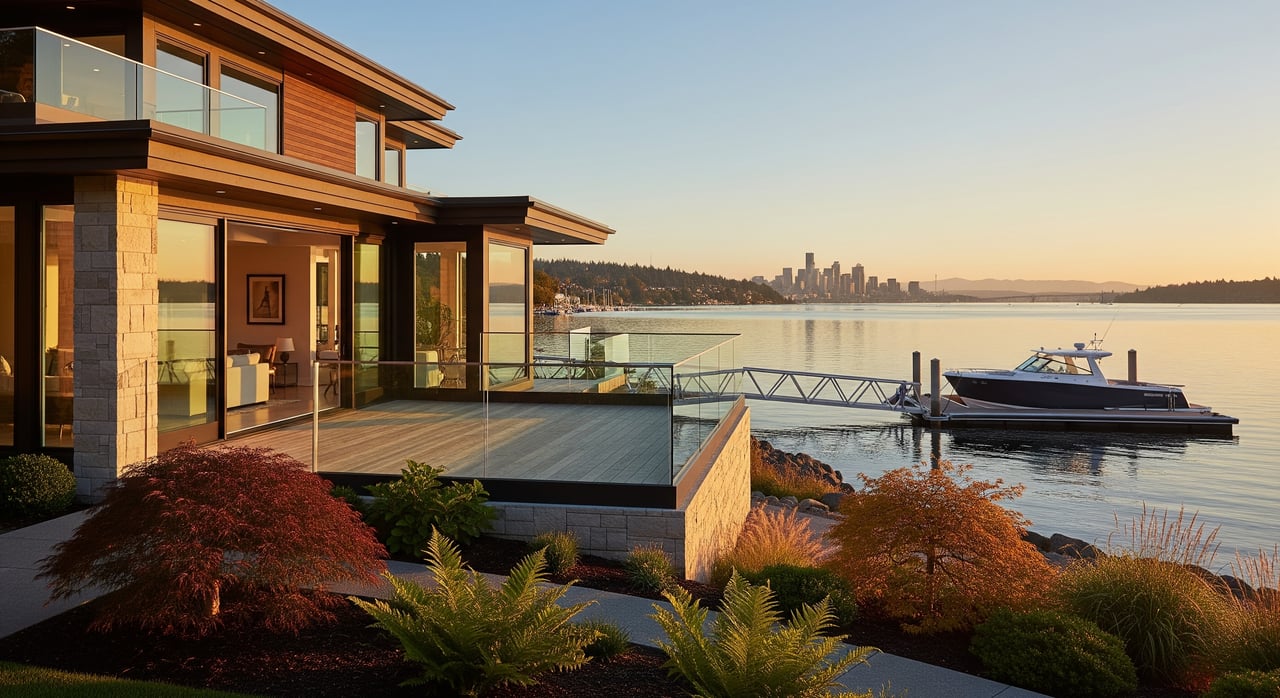
- Dock and moorage: type, dimensions, footprint relative to the ordinary high water mark (OHWM), number and size of floats and piles, materials used, utilities on the dock, and any slip rights or limitations.
- Bulkheads and stabilization: type (riprap, concrete, vegetated slope), age, materials, as‑built dimensions, and any signs of erosion or undermining.
- Vegetation and buffers: existing trees and shrubs, cleared or lawn areas, invasive species, and any landscaping or tree removal permits or violations.
- OHWM and boundaries: survey showing OHWM location and property lines; confirm if any dock elements cross tidelands or extend beyond your property.
- Environmental constraints: wetlands, mapped habitats, floodplain designation, and geologic hazard areas that overlap shoreline features.
- Insurance and maintenance: current coverage, prior claims, and maintenance logs such as pile replacements or float pump‑outs.
Title and transaction items
- Recorded easements, leased tidelands, upland leases, and HOA rules related to shoreline features.
- CC&Rs that affect moorage or access.
- Seller disclosures and past condition statements referencing shoreline structures.
Vegetation buffers and stabilization basics
Bellevue’s Shoreline Master Program and local code set what you can do in buffers and how you maintain vegetation.
Routine maintenance vs clearing
- Light trimming or hazard tree removal is often allowed with conditions.
- Clearing or extending lawn into buffer areas is commonly restricted and may require permits, mitigation, or planting plans.
Bulkheads and hard vs soft solutions
- Older hard armoring may be legal but repairs or replacements can trigger permit review. Many agencies favor soft or bioengineered options where feasible.
- Like‑for‑like work within the same footprint may be treated differently than enlarging or relocating a structure. Confirm with Bellevue and WDFW whether a repair qualifies for streamlined review.
Exemptions, permits, and variances
Exemptions
- Some minor projects, emergency actions, or work below the state monetary threshold may be exempt from a Shoreline Substantial Development Permit. Exemptions are narrow and often still require other approvals such as an HPA or Corps verification. Always confirm with the City rather than self‑declaring an exemption.
Conditional uses
- Certain moorage types or uses are allowed only with a Shoreline Conditional Use Permit. Expect discretionary review and possible mitigation conditions.
Variances
- If strict application of the SMP creates undue hardship, a variance may be possible. Variances require findings that the project serves the public interest and is compatible with shoreline policies.
Rule‑of‑thumb
- Like‑for‑like maintenance is usually easier. Changes in footprint, location, height, or materials often trigger a full permit path with Bellevue, WDFW, and the Corps.
Practical steps to get listing‑ready
- Step 1: Gather records. Pull your title report, shoreline permits, as‑builts, HOA docs, maintenance invoices, and any survey showing OHWM and property lines.
- Step 2: Request a Bellevue pre‑application or intake review. Ask Development Services to confirm permit status, past approvals, and whether any work needs retroactive action.
- Step 3: Fill gaps with professionals. If records are incomplete, hire a licensed surveyor to locate the OHWM and structure footprints, and a shoreline engineer or marine contractor for condition assessments and repair options.
- Step 4: Coordinate early if work is likely. If a buyer may request dock or bulkhead improvements, start the conversation with WDFW for HPA, Bellevue for SDP, and the Corps for in‑water work.
- Step 5: Finalize disclosures. Assemble clear, factual seller disclosures and have your agent or counsel review language for accuracy.
Red flags that should pause a listing
- No permits for obvious or recently modified shoreline structures.
- Prior enforcement actions or unresolved violations.
- Survey or OHWM conflicts with the actual dock or with ownership claims.
- Significant erosion, bulkhead undermining, or visible structural failure.
- Shared or unclear moorage rights without recorded agreements.
What to disclose and how to market
- Provide buyers with permits, approvals, as‑builts, engineering reports, maintenance records, easements, HOA rules, and any enforcement history.
- Use factual marketing language. Avoid saying “permitted” or “legal” unless you have full documentation. Instead, say, “Existing private dock. Seller will provide permit records.”
- Describe water access precisely: private waterfront, community dock, deeded access, or shoreline only. Note if any structure lacks permits or if an as‑built survey is not available.
Timelines, costs, and financing impacts
- Timelines: Gathering records and assessments can take days to weeks. Shoreline permits, HPAs, Corps authorizations, and variances may take several weeks to many months depending on complexity.
- Costs: Surveys, engineering, application fees, and potential mitigation can add materially to project budgets.
- Buyer and lender impacts: Lenders and title companies often require clear evidence of permitted status. Insurance can be affected by shoreline structure type, condition, and risk factors.
Ready a clean package for buyers
- Provide a complete scan of shoreline permits and approvals, a recent survey with OHWM and property lines, condition assessments, and a concise summary of any unpermitted work and steps taken to address it. Include contractor and engineer contacts plus any HOA docs and recorded easements affecting moorage.
A well‑prepared Bellevue waterfront listing gives buyers confidence and keeps your transaction on schedule. If you want help organizing permits, coordinating pre‑application checks, and presenting your shoreline features clearly, connect with the local team that treats details like these as non‑negotiable. Get started with a quick conversation and a pricing baseline today through Unknown Company.
FAQs
Can I market my Bellevue home as “waterfront” if access is via easement?
- Yes, but be precise. Describe the exact access type, such as “deeded access” or “community dock subject to HOA rules,” instead of implying private waterfront ownership.
Do I need to disclose an unpermitted dock to buyers in Bellevue?
- Yes. Disclose known facts, provide any records you have, and outline steps taken to resolve or regularize the structure.
Is replacing an old bulkhead considered a simple repair in Bellevue?
- Not always. Whether it qualifies as a repair depends on footprint, materials, function, and local SMP standards. Confirm requirements with the City and WDFW.
What permits are commonly required for a new or modified dock in Bellevue?
- Expect a Shoreline Substantial Development Permit from Bellevue unless an exemption applies, a WDFW Hydraulic Project Approval, and possible U.S. Army Corps authorization.
How long do shoreline permits typically take relative to escrow timelines?
- Shoreline permits and related approvals can take weeks to months, which often extends beyond standard escrow. Start early and plan contract contingencies if work is anticipated.